
Winter can be especially challenging for people living with respiratory conditions. Cold air, dry indoor heat, and seasonal illnesses often make symptoms worse. This guide to winter respiratory health explains why breathing can feel harder in winter and shares clear, practical steps to help you manage symptoms and stay comfortable all season long.
Why Winter Makes Breathing Harder
Cold weather affects the lungs in several ways. Understanding these triggers can help you reduce flare-ups and plan ahead.
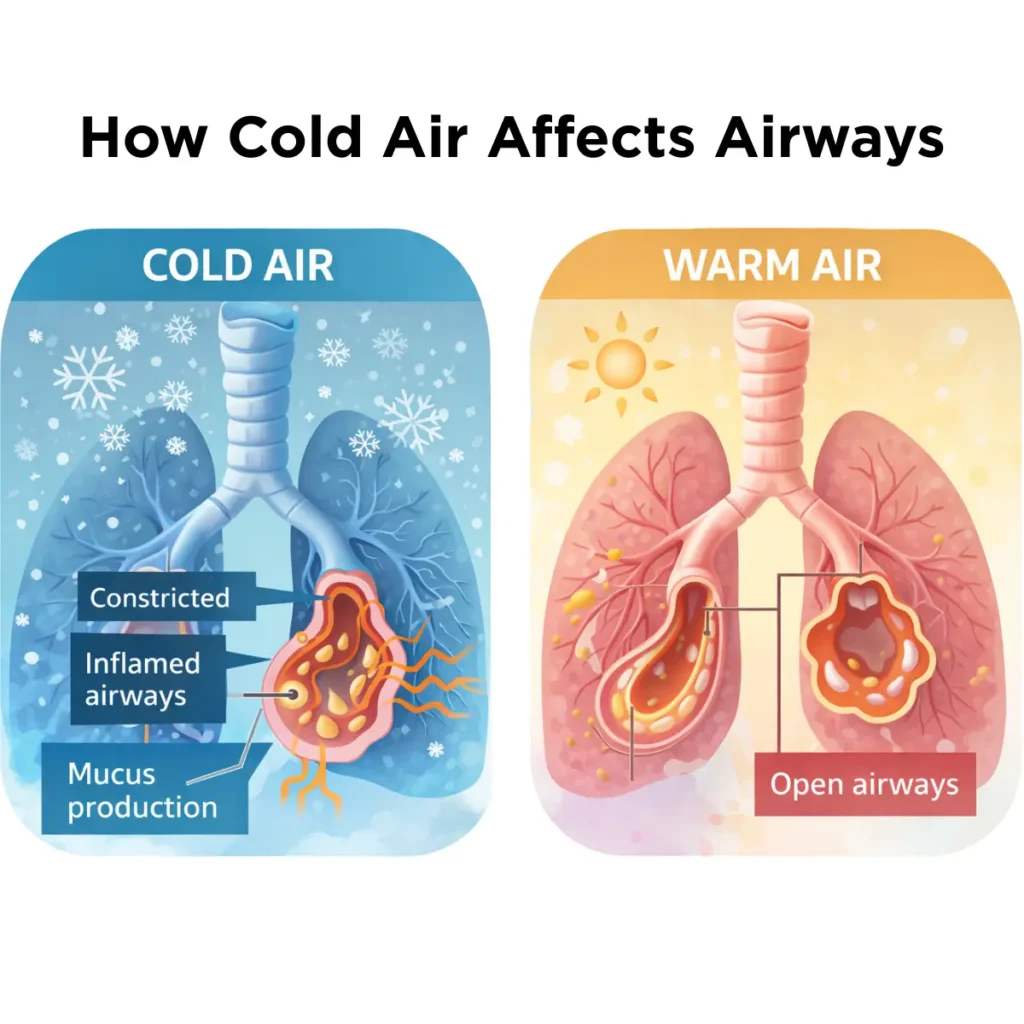
These factors often contribute to difficulty breathing in the winter, especially for people with chronic lung conditions.
Cold Weather Breathing Tips That Actually Help
Simple daily habits can protect your lungs when temperatures drop.
1. Warm the air you breathe
Breathing through your nose helps warm and humidify cold air before it reaches your lungs.
Covering your mouth with a scarf or mask outdoors can also reduce irritation.
2. Avoid Sudden Temperature Changes
Going from a warm home to freezing air can trigger coughing or shortness of breath.
Pause briefly near the door to let your body adjust.
3. Stay Gently Active
Light indoor movement improves circulation and lung function without exposing you to cold air.
COPD Winter Management: What to Focus On
For individuals with COPD, winter planning is essential.
Consistent routines are key to effective COPD winter management.
Humidifier Benefits for Respiratory Comfort
Dry indoor air can irritate airways and worsen congestion. By adding moisture into the air with humidifiers, you can sooth irritated lungs, reduce coughing and throat dryness, and help loosen mucus; making breathing easier!
Listening to your body is key to safe winter respiratory health.
Aim for an indoor humidity between 30-50%. Clean humidifiers regularly to prevent mold or bacteria buildup.
Why is breathing harder in winter?
Cold, dry air narrows airways and dries lung tissues, making breathing feel tighter—especially for people with asthma, COPD, or other respiratory conditions.
Additional Winter Respiratory Health Tips
Conclusion: Breathe Easier All Winter Long
Managing winter respiratory health is about preparation, awareness, and consistency. By protecting your lungs from cold air, maintaining proper humidity, and following condition-specific care routines, you can reduce symptoms and stay comfortable throughout the season.
If you have questions about winter respiratory care or managing symptoms at home, reach out to a trusted healthcare professional or respiratory specialist for guidance.